Step 1: Brew tea.
For 1 gallon of boozy booch, you will need to brew 14 cups of organic black tea with 8 tea bags in spring (or reverse osmosis) water and 1 cup of organic sugar.
Step 2: Allow the tea to cool before adding in your gallon fermenter. Add your SCOBY and the starter culture liquid that come along with it. Allow to ferment for 10 days with a clean t-shirt or breathable cloth secured over the top to prevent fruit flies from accessing the inside. The fermentation organisms require oxygen flow through the cloth to reproduce and grow more SCOBY and beneficial enzymes/acids.
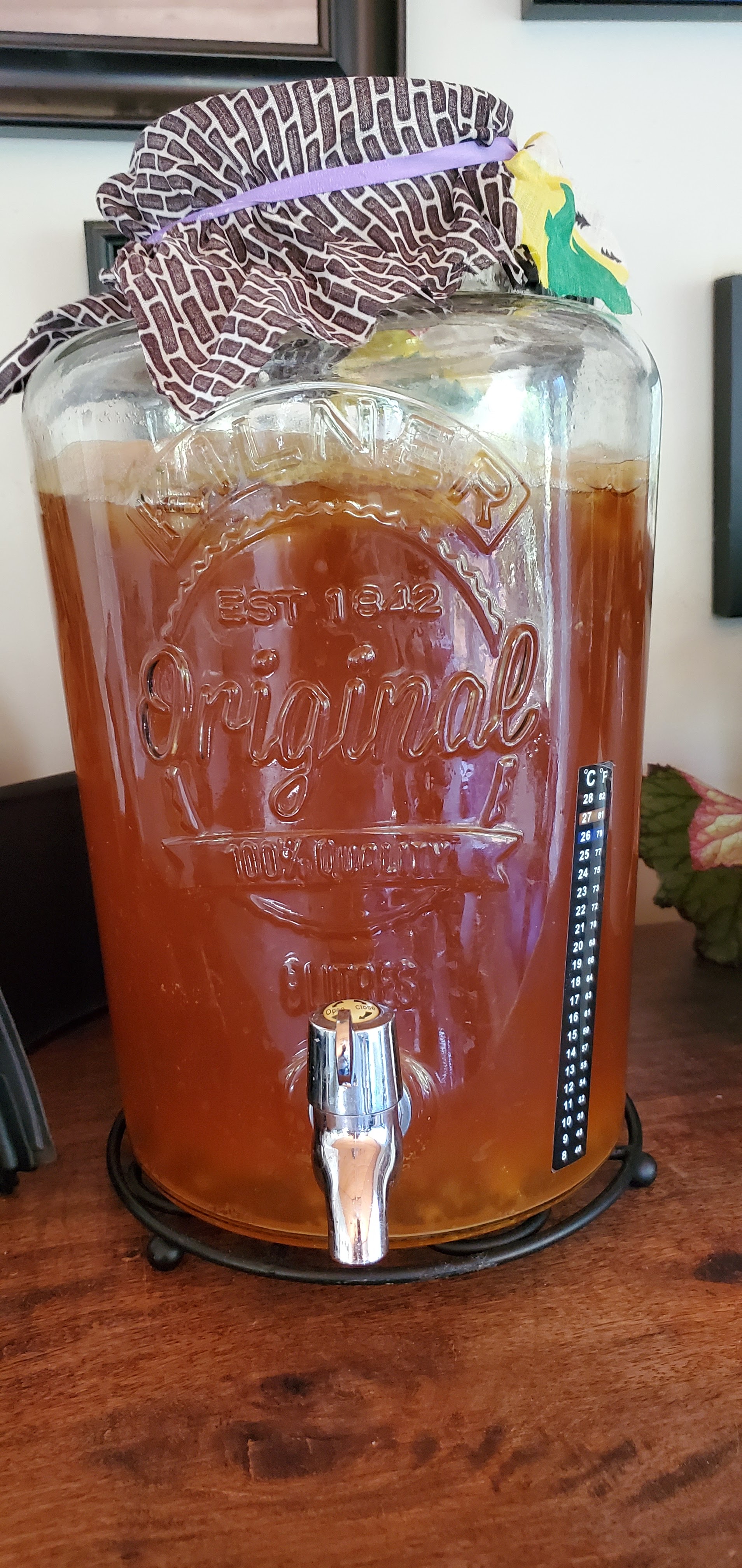
Step 3: Second fermentation time!
After step 2, remove the SCOBY. You essentially have “normal” kombucha with only a trace amount of alcohol. The pH has dropped considerably as more beneficial acids are produced. If it’s too acidic (like vinegar) the second fermentation may not start or complete, so make sure to taste along the way (days 7-10) and catch before it becomes overly sour.
Step 4: For this second round, dissolve 1 cup of organic sugar in 1 cup of warm spring (or RO) water. Once it cools, add ¾ teaspoon of a dehydrated champagne yeast with characteristics that appeal to you.
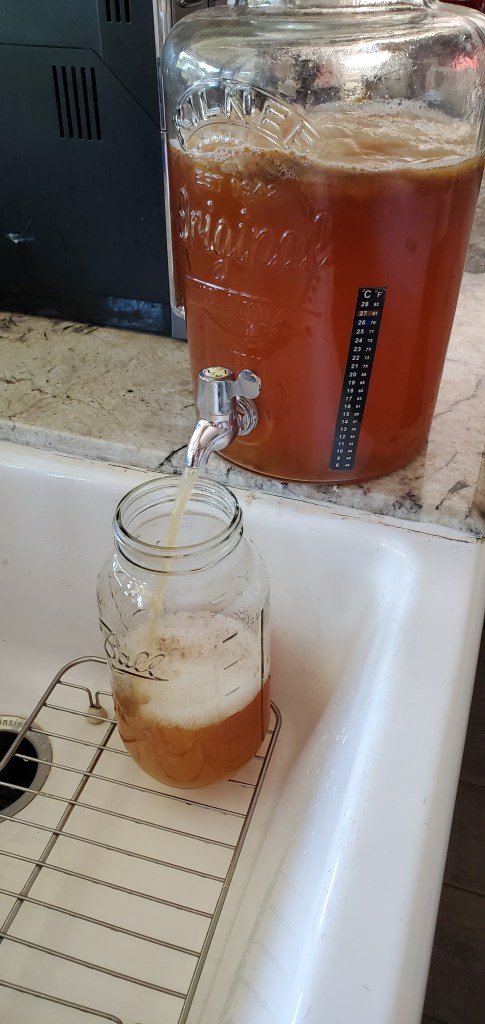
Pouring into bottle 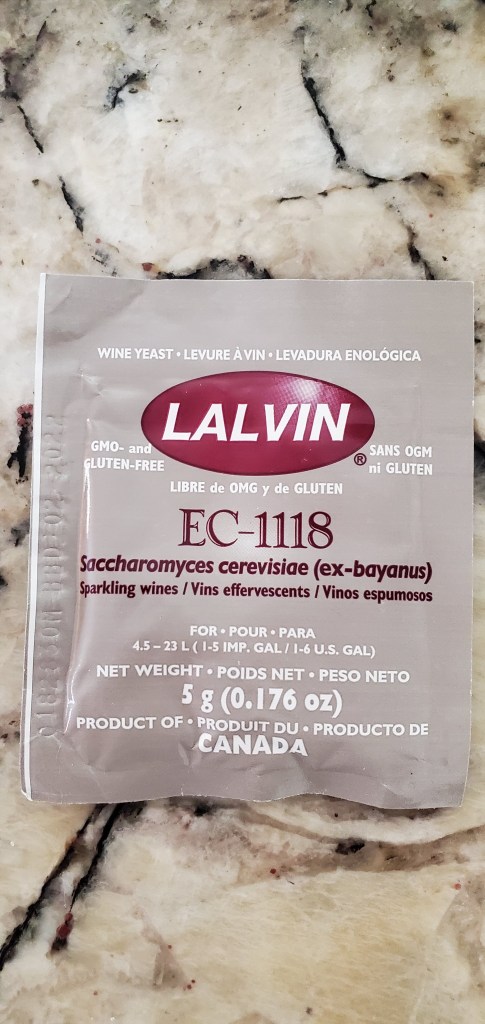
The Yeast 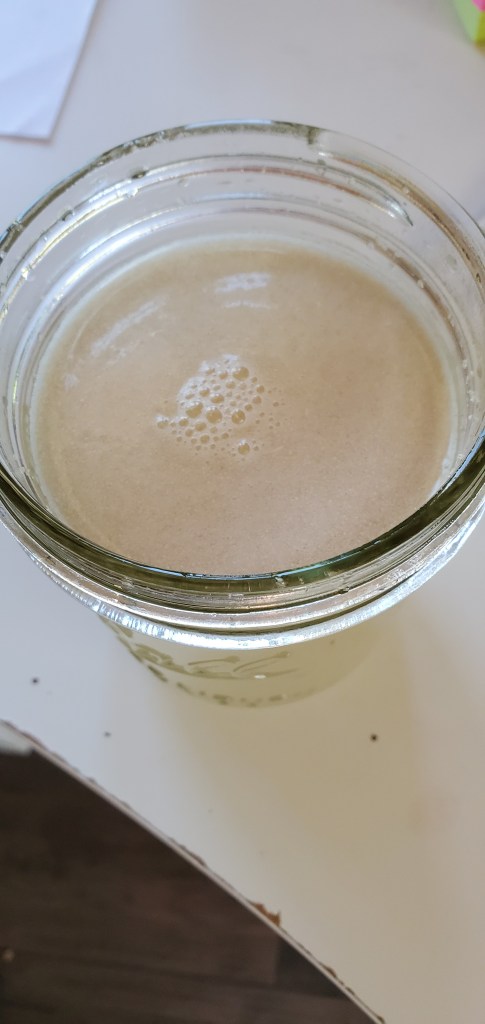
Foaming yeast and sugar h20 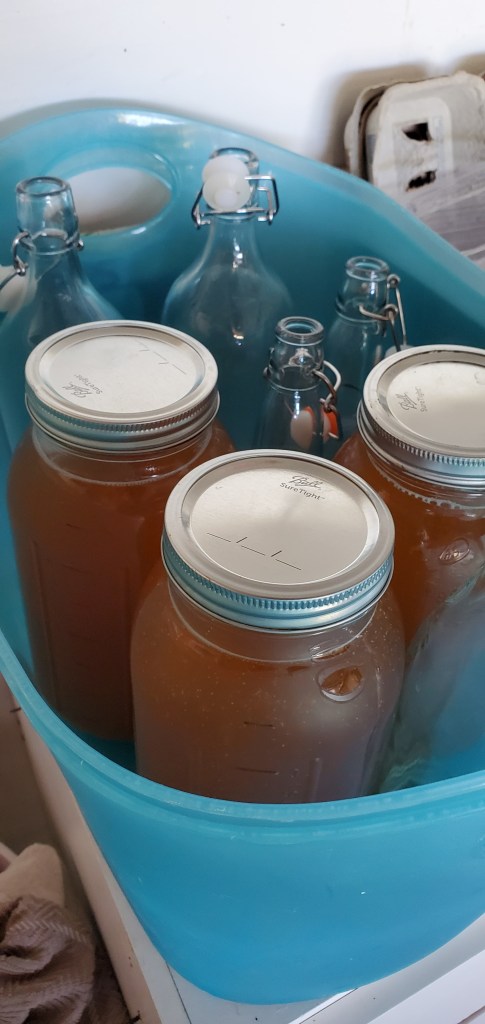
Brewing
Within a few minutes the yeast and sugar mixture will begin to foam, this means the yeast has re-awakened from it’s slumber and ready to eat up all the sugars to produce more alcohol. If the yeast does not foam, dump the sugar water into your compost and try again with another packet of yeast. Once you’re happy with your active yeast, add the mixture to your gallon of kombucha and sufficiently stir it in. Adding dry yeast directly into the fermenter without allowing it to rehydrate first will cause it to not achieve it’s foothold against the other active bacteria and yeast who already staked their claim in the environment.
Step 5: Wait for the magic
This time instead of a cloth cover you’ll want to loosely close the lid over the top. The idea is to only allow positive pressure of CO2 to build and escape rather than air entering the vessel. Allow an additional 7-14 fermentation days and store somewhere with relatively consistent temperature and low light while the ABV climbs. You’ll know it’s working when you see bubbles forming and rising to the surface!
Step 6: Add flavors and bottle
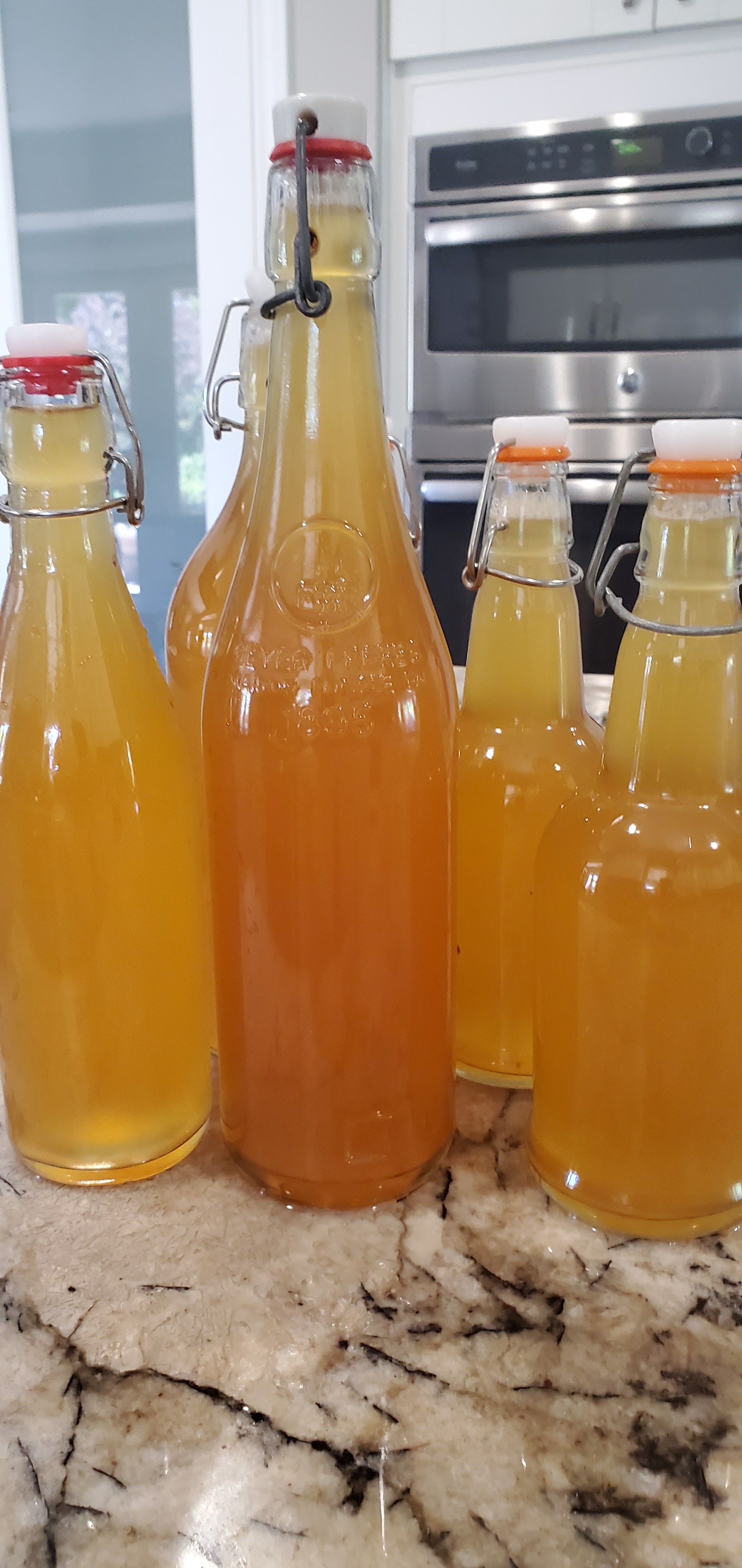
After 7-14 days of second fermentation, it’s time to add flavors! Give it a taste first and notice how dry and boozy it is before deciding your juice additions to balance it out. Add any organic fruit juices that you’d like. As a final step, you’ll want to pour the jug of booch into smaller, single serve bottles.
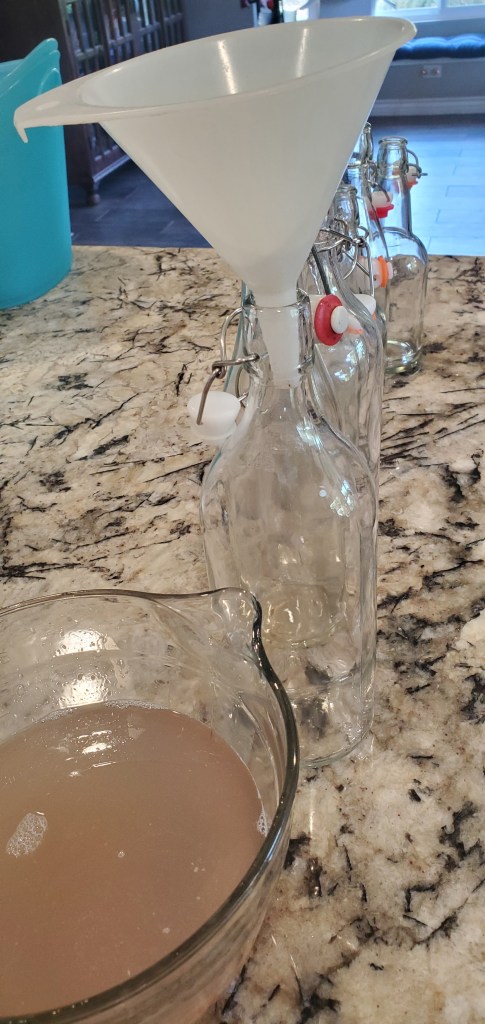
Pour about 1/2 in into bottle 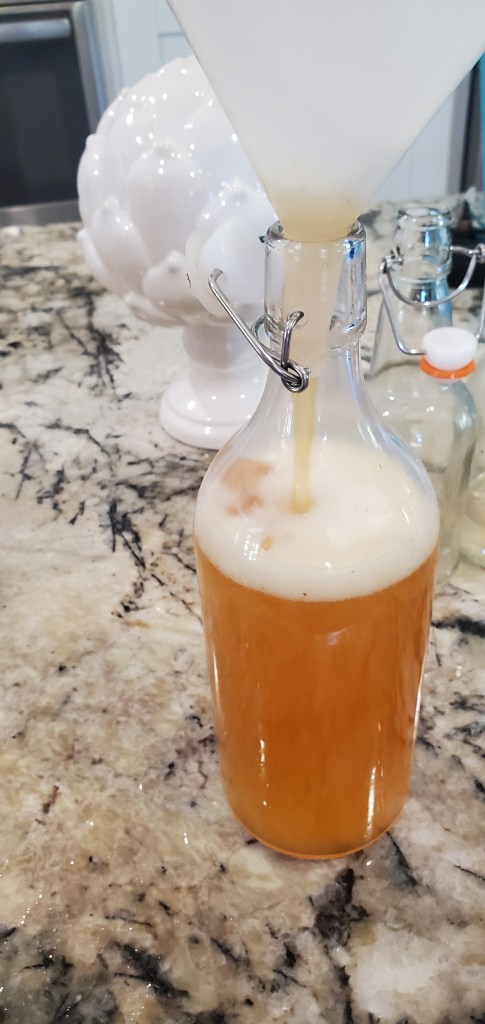
Fill bottle up with Brew 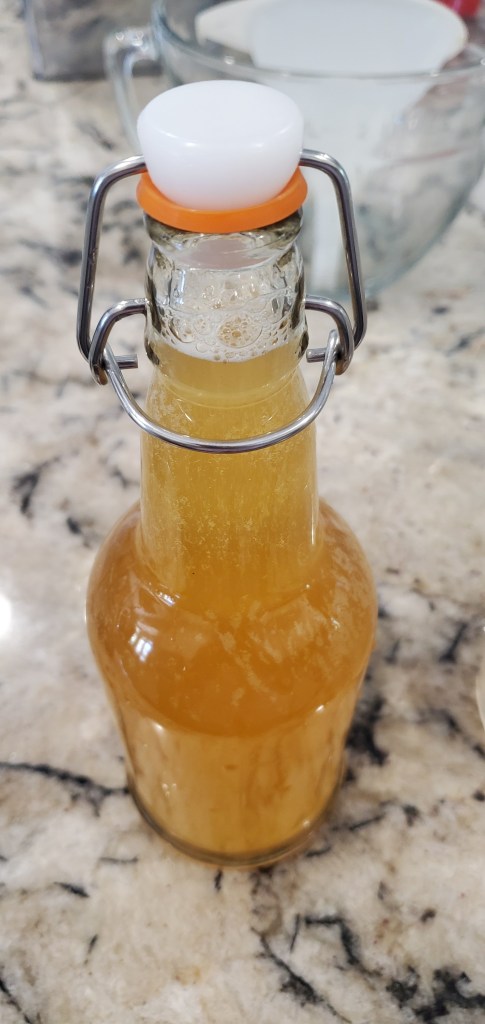
Seal
Step 6: Bottle condition
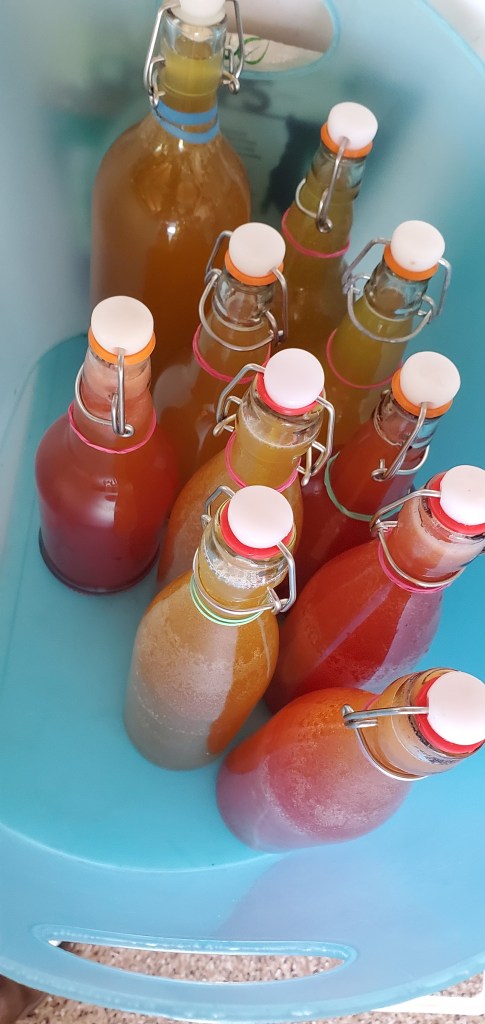
By using a little bit of extra juice the sugars will continue to ferment and trap the carbonation in the bottles for the delicious zippiness we all love that helps unlock the aromas and flavors of the finished product. Leave the bottles at room temp for 24-48 hours to build carbonation, then store them the fridge before they get too fizzy!
 ferrerfarm.org